
Light has always been one of nature’s most amazing phenomena. Every day we use the sunlight, turn on lamps in our homes, and at night in cities, we benefit from the light of streets and squares. But the reality is that light is not just what is seen with the eye. There is a large part of light that is invisible to the human eye, but it can have major effects on life, health, and even industry. One of the most famous examples of this invisible part of light is ultraviolet radiation, or UV.
UV radiation is naturally produced by the sun, and a small amount of it reaches the Earth’s surface. This is the same radiation that causes our skin to change color or even get sunburned when we stay in the sun for a long time. In addition to this, scientists and industrialists have been able to produce this radiation artificially and use it in various fields.
The interesting point about ultraviolet radiation is that it is considered a double-edged sword. On one hand, it can be beneficial for the body; for example, it helps the body produce vitamin D or is used for disinfection in various industries. But on the other hand, if we are exposed to it too much, it can harm the skin, eyes, and even the environment. For this reason, understanding it correctly is very important.
In this article, we want to examine in simple language what exactly UV radiation is, what its applications and dangers are, and why understanding it is essential in today’s world. Finally, we will also examine the connection of this radiation with the world of lighting and urban lighting to see why using safe light sources, like LEDs, is considered a suitable replacement for dangerous lights.
What is UV radiation?
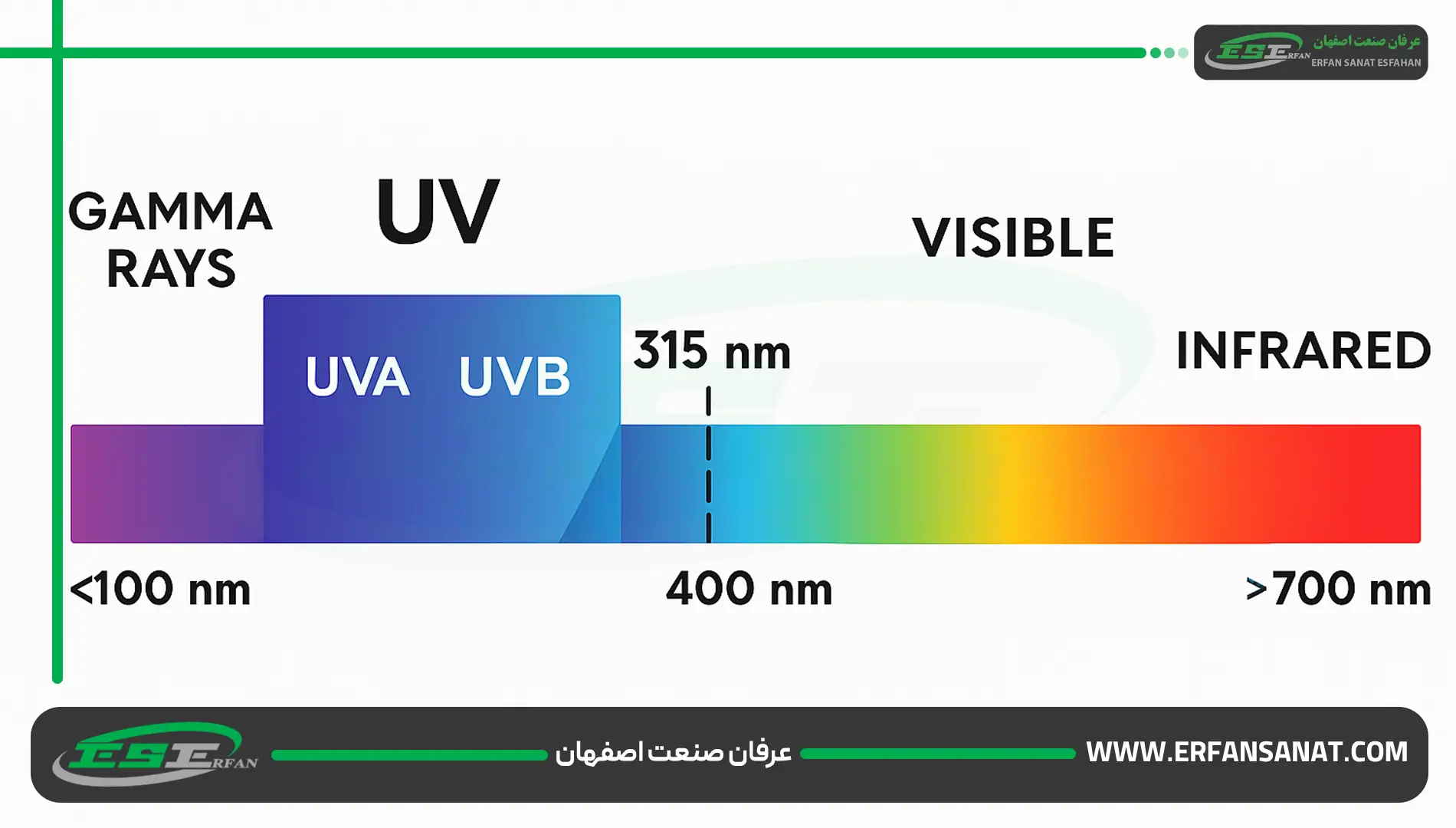
Ultraviolet radiation, or UV radiation, is one of the invisible rays of the sun whose wavelength is shorter than visible light and longer than X-rays. This very characteristic makes it impossible for the human eye to see it, but its effects on the environment and the body are clearly visible.
The wavelength of UV radiation is usually between 100 and 400 nanometers, while visible light is in the range of 400 to 700 nanometers. For this reason, it is called “ultraviolet”; because its wavelength is slightly beyond the color violet.
Types of UV radiation
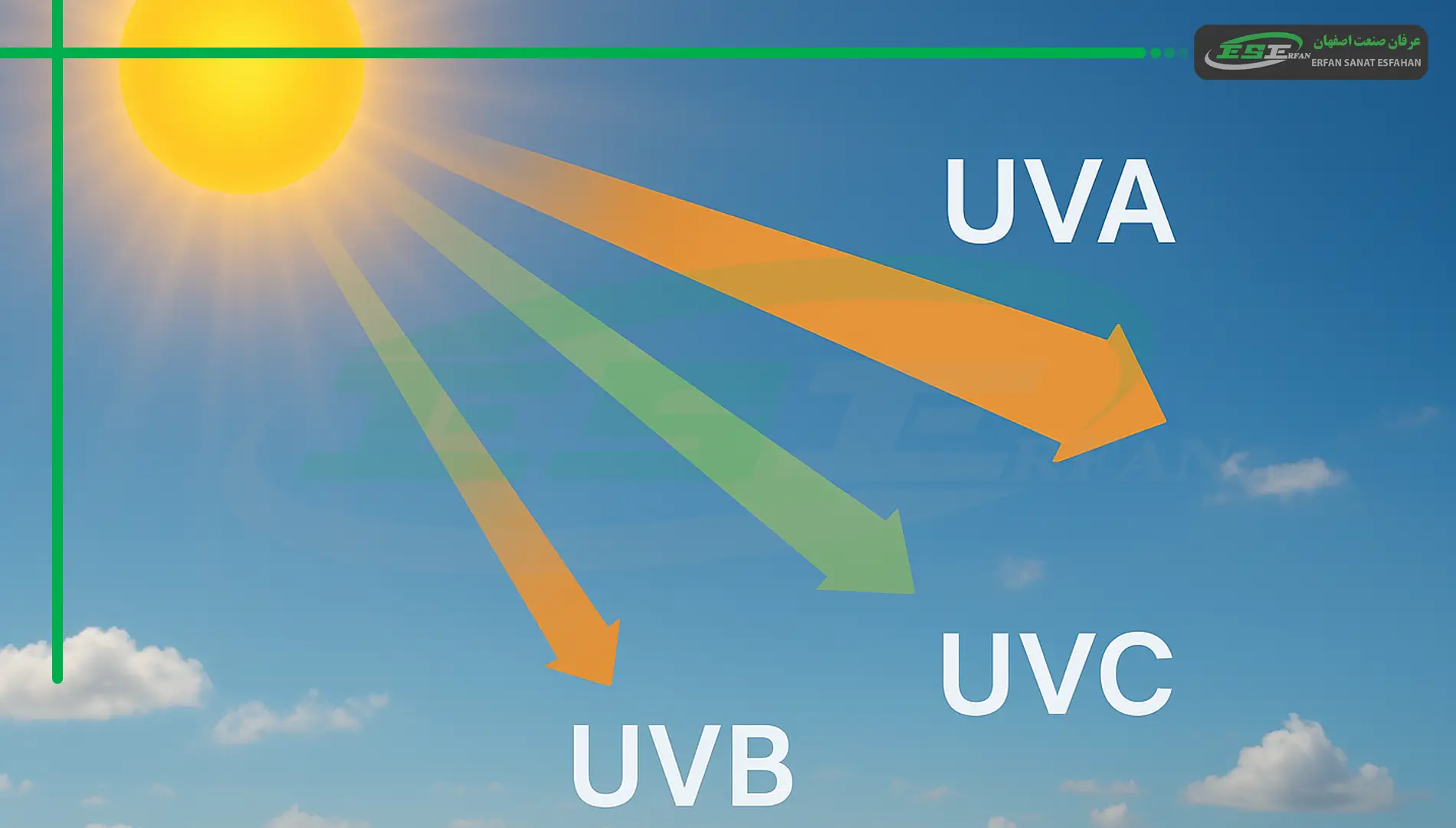
Scientists divide ultraviolet radiation into three main categories:
1. UVA Radiation (Type A Ultraviolet Radiation)
-
Wavelength: 320 to 400 nanometers
-
It has the largest share of the sun’s rays
-
It can penetrate deep into the skin
-
Long-term exposure to it causes premature skin aging
2. UVB Radiation (Type B Ultraviolet Radiation)
-
Wavelength: 280 to 320 nanometers
-
It has more energy than UVA
-
The main cause of sunburn and skin discoloration
-
In low doses, it helps the body produce vitamin D
3. UVC Radiation (Type C Ultraviolet Radiation)
-
Wavelength: 100 to 280 nanometers
-
It is the strongest type of ultraviolet radiation
-
It is absorbed by the ozone layer and does not reach the Earth’s surface
-
It is used artificially in industry for disinfection and sterilization
Effect of UV radiation on humans and the environment
Ultraviolet radiation, like many other things in nature, is a double-edged sword. This means it can be beneficial, but if we are exposed to it too much, it will be dangerous. Understanding its positive and negative effects is very important for daily life and also for urban planning.
Positive effects of UV radiation
-
Production of Vitamin D in the body
When our skin is exposed to a suitable amount of UVB radiation, it begins to produce Vitamin D. This vitamin is essential for bone health and the immune system. -
Use in medicine and industry
UVC radiation is used under controlled conditions as a powerful tool for disinfection and sterilization. For example, it is used in hospitals or for water purification. -
Aiding plant growth
Plants also need a limited amount of UV radiation. This radiation helps with growth processes and the production of some protective substances in plants.
Negative effects of UV radiation
-
Damage to skin and eyes
Excessive exposure to UVA and UVB can cause sunburn, skin wrinkling, and even increase the risk of skin cancer. It can also harm the eyes and increase the risk of diseases like cataracts. -
Impact on the environment
Intense UV radiation can damage aquatic ecosystems. For example, plankton, which are the base of the food chain in the seas, are very sensitive to UV. -
Degradation of materials and surfaces
Ultraviolet radiation can cause decay and fading of building materials, car paint, and city signs. For this reason, the effect of UV must always be considered in urban design.
The role of UV radiation in urban lighting
When it comes to urban lighting, most people only think about beauty and brightness. But the reality is that artificial lights in urban spaces can have a significant impact on health, safety, and even the efficiency of equipment. One of the important issues that must be considered in urban light design is UV radiation.
Why is controlling UV radiation in the city important?
-
Protecting people
Streets, parks, and squares are places where people spend a lot of time. If artificial lights or even sunlight enters these spaces without control, it can increase risks such as damage to the skin and eyes. -
Protecting urban materials and equipment
UV radiation can cause color degradation, plastic decay, and material cracking. For this reason, in urban equipment such as benches, signs, and even streetlights, coatings and materials that are resistant to UV are used. -
Reducing maintenance costs
When equipment is not protected against UV, it deteriorates much faster and requires repair or replacement. This issue increases the costs for municipalities. Using UV-resistant technologies is, in a way, an investment for the future.
Positive use of UV in urban lighting
It’s interesting to know that UV radiation is not always considered an enemy in cities. In some cases, this radiation is used purposefully and in a controlled manner:
-
UV lights for disinfection: In some enclosed public spaces like subways or public restrooms, UVC radiation is used to disinfect the environment.
-
Lighting effects: In artistic designs and special lighting (like festivals or urban shows), UV light is used to create attractive visual effects.
Solutions for protection against UV radiation in the urban environment
Now that we understand what effects UV radiation has, it is important to know how we can prevent its negative effects in daily life and also in urban design.
Individual solutions
-
Using sunscreen
The most important recommendation for everyone who spends a lot of time outdoors. Sunscreens with an appropriate SPF can filter out a large amount of harmful rays. -
Standard sunglasses
Sunglasses that have the ability to absorb UVA and UVB can protect the eyes against diseases like cataracts. -
Appropriate clothing
Wearing light-colored clothes and wide-brimmed hats, especially on summer days, greatly reduces the effect of direct UV radiation.
Urban and industrial solutions
-
Using UV-resistant coatings
For paints, materials, and urban equipment, materials that are resistant to ultraviolet radiation can be used. This both increases the lifespan of the equipment and reduces maintenance costs. -
Designing shades and green spaces
In many modern cities, smart shades or green spaces are used to reduce the intensity of UV radiation in thoroughfares and squares. -
Smart lighting
In city lights, technologies can be used that, in addition to providing illumination, do not produce harmful UV radiation and, in some cases, even use controlled UV light for health purposes.
Conclusion
Ultraviolet or UV radiation is a part of sunlight that we do not see, but its effects on daily life, human health, and even urban design are very serious. As we have seen, this radiation can have many benefits, such as producing Vitamin D or helping with disinfection, but at the same time, if not controlled, it harms the skin, eyes, environment, and even building materials.
In urban lighting, paying attention to the effects of UV is particularly important. Using resistant materials, designing shades, smart lighting, and educating people about personal protection can reduce the negative effects of UV radiation.
Finally, it must be said that UV radiation is a natural phenomenon that cannot be eliminated, but with proper management, one can both benefit from its advantages and stay safe from its dangers.